How to choose a suitable wireless temperature monitoring system
Why do industrial equipment need wireless temperature monitoring?
What happens when industrial equipment overheats without warning? Production lines shut down, costs skyrocket, and safety risks increase dramatically. That's why wireless temperature monitoring systems are crucial for industrial environments.
Sudden temperature anomalies can lead to equipment malfunctions, downtime, and financial losses. Wireless temperature monitoring acts like an "automatic temperature guardian" for equipment, tracking temperature changes in real time and preventing costly accidents.
In this guide, you will learn:
- What is a wireless temperature monitoring system, and how does it work?
- Differences between active and passive temperature monitoring
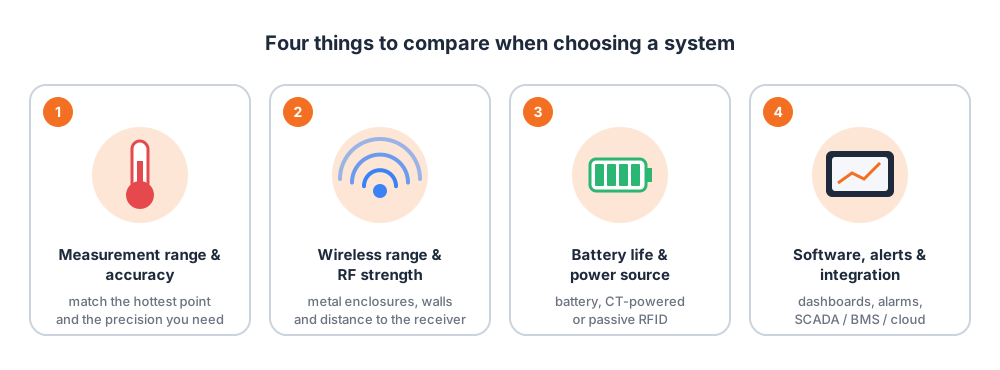
- How to choose a monitoring system suitable for your industry
What is a wireless temperature monitoring system?
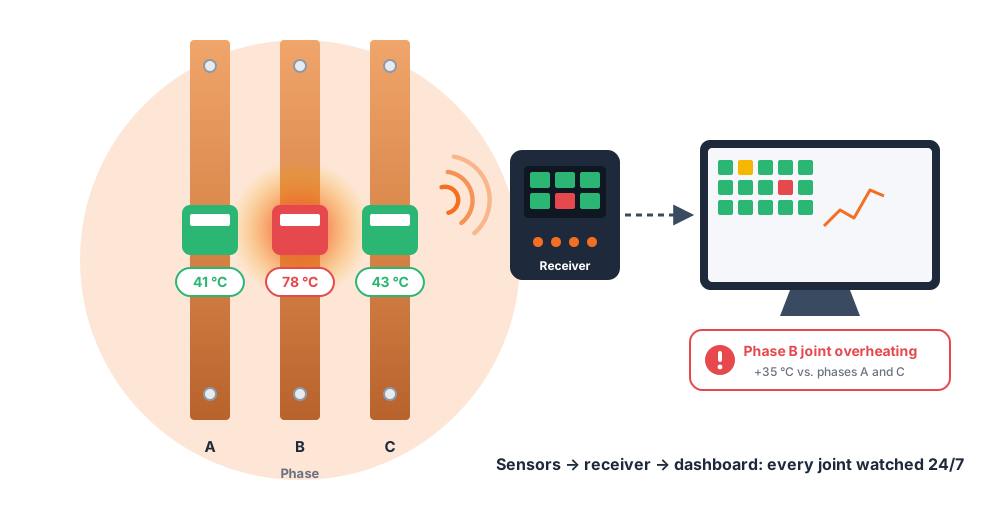
Wireless temperature monitoring systems can continuously track temperature changes without wiring. A typical architecture includes :
Sensors : Temperature is measured using thermocouples, thermistors, or RTDs (resistive temperature sensors).
Reader/Receiver : Collects data from sensors and transmits it to displays, control systems, or the cloud.
Operating method.
- The sensor periodically checks the temperature, much like a chef constantly confirms that the oven is at the correct temperature.
- The collected data is transmitted to the reader, and then the system processes and uploads it to the central platform.
- The system can display real-time data and automatically trigger an alarm when the temperature exceeds a safe threshold.
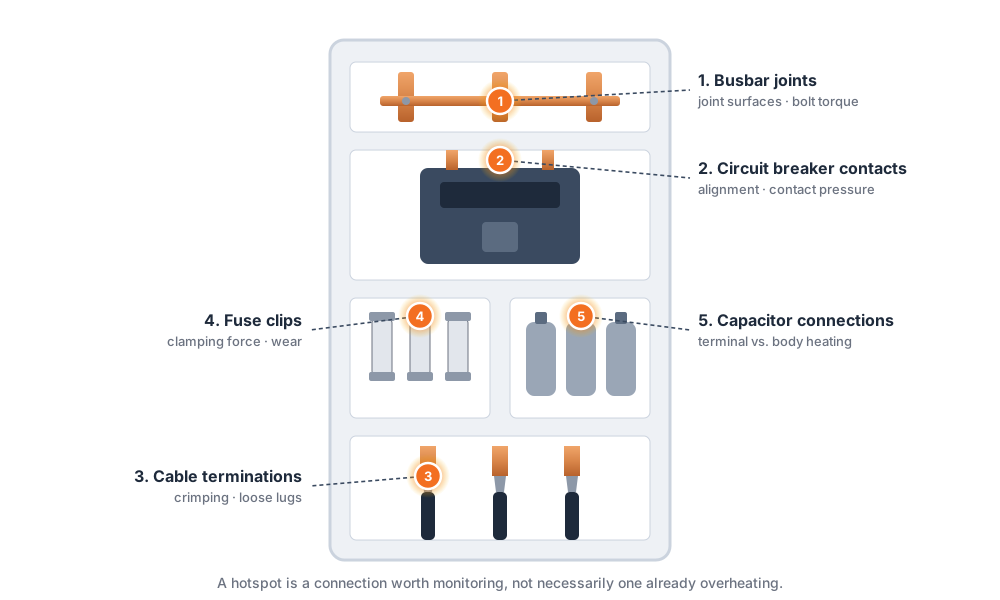
Wireless temperature monitoring is particularly suitable for high-voltage power equipment, hazardous environments, and automated production lines .
Active vs. Passive Wireless Temperature Monitoring: How to Choose?
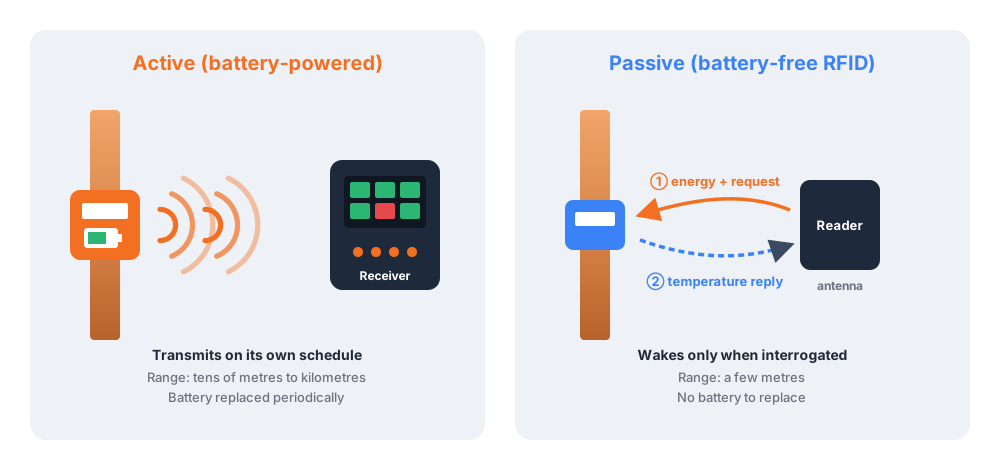
Active sensors carry a battery and transmit on their own; passive RFID sensors have no battery and reply when a reader energises them. Read more in our wireless busbar sensor FAQ.