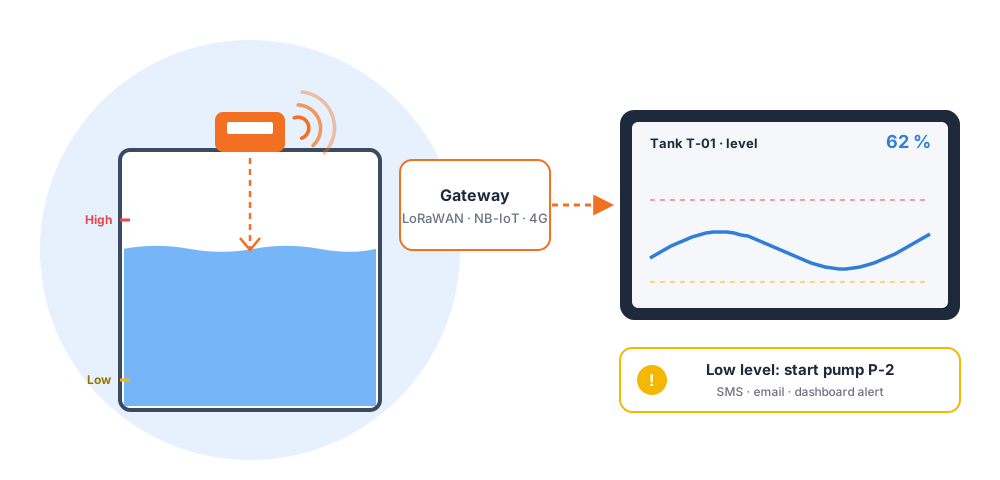
A water level monitoring system measures the level of water in tanks, wells, sumps, reservoirs or rivers using a level sensor, and sends the readings to a controller, SCADA or cloud dashboard. It shows the level in real time, raises alerts for high or low levels and can control pumps automatically to prevent overflows and dry running.
Key takeaways
- A system combines a level sensor with a logger, communications, software and alarms; the sensor alone only measures.
- Most sensors use one of three principles: hydrostatic pressure, echo time of flight (ultrasonic or radar) or a float.
- Choose by site: hydrostatic for wells and deep tanks, radar for outdoor or difficult surfaces, ultrasonic for clean indoor tanks.
- Use four setpoints (HH, H, L, LL) to control pumps and protect against overflow and dry running.
- For remote sites, LoRaWAN, NB-IoT or 4G with battery or solar power removes the need for cabling and site visits.
What Is a Water Level Monitoring System?
A water level monitoring system continuously measures the level of water in tanks, sumps, wells, reservoirs, canals or rivers, and turns those readings into information people can act on. A level sensor measures the water; a logger or controller collects the readings; a wired or wireless link carries them to SCADA, a building management system or a cloud dashboard; and software shows trends, raises alarms and can start or stop pumps automatically.
The result is that operators know the level at every site without visiting it, overflows and dry-running pumps are prevented, and decisions about pumping, storage and flood response are based on data rather than guesswork.
Water Level Sensor vs. Water Level Monitoring System
| Water level sensor | Water level monitoring system | |
|---|---|---|
| What it is | A single device that measures level | Sensors plus logger, communications, software and alarms |
| Output | A signal: 4–20 mA, RS485, a switch contact or a digital value | Dashboards, alerts, reports and control actions |
| Where the data goes | A local display or controller | SCADA, BMS, cloud platform, mobile app |
| Typical use | Control one pump or show one tank level | Manage many tanks, wells or sites from one place |
How a Water Level Monitoring System Works
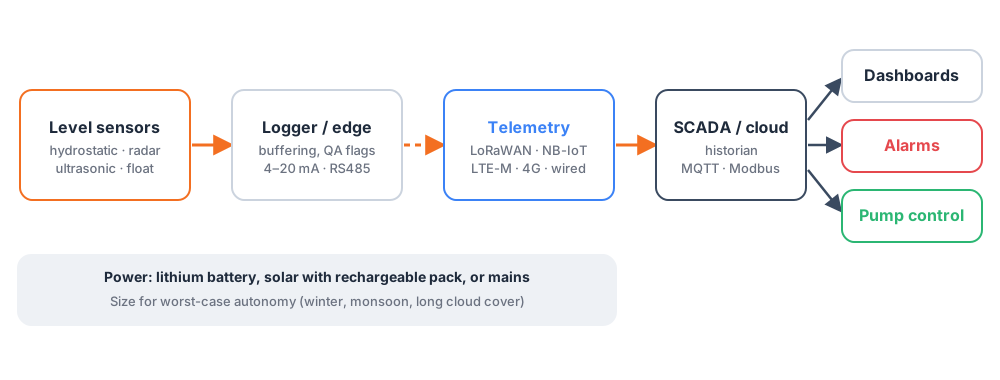
- Level sensor: hydrostatic, radar, ultrasonic, float or another type, chosen to suit the site.
- Logger or edge device: reads the sensor, buffers data if the link drops, and can flag suspect readings before they cause false alarms.
- Telemetry: a wired link (4–20 mA, RS485 Modbus) to a nearby PLC, or a wireless link (LoRaWAN, NB-IoT, LTE-M, 4G) for remote sites.
- Platform: SCADA, a historian or a cloud application stores the data and shows dashboards.
- Actions: alarms by SMS, email or app, automatic pump control, and reports for operations and compliance.
How Water Level Sensors Measure Level
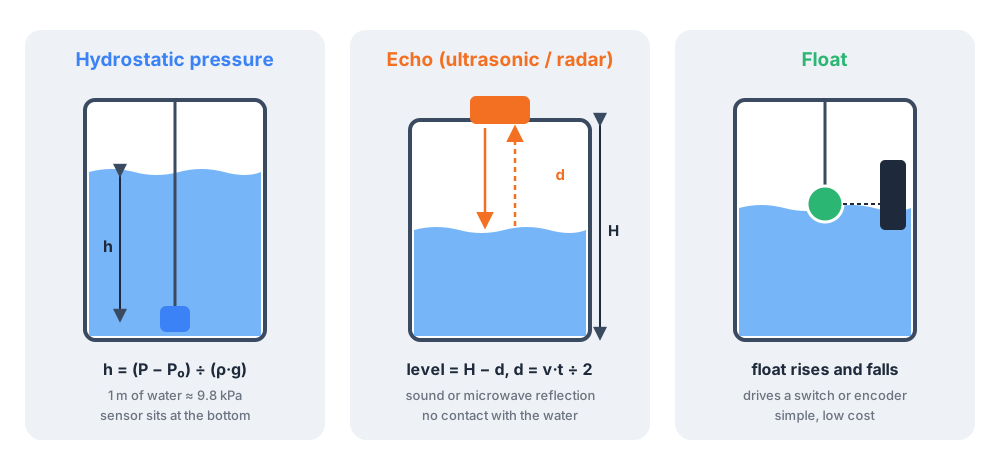
Almost every water level sensor uses one of three physical principles:
1. Hydrostatic pressure
Water pressure increases with depth, by about 9.8 kPa (0.098 bar) for every metre of water. A submersible sensor at the bottom measures this pressure and calculates the level: h = (P − P₀) ÷ (ρ × g), where P₀ is atmospheric pressure, ρ the water density and g gravity. A vent tube in the cable, or a second barometric sensor, removes the effect of changing atmospheric pressure.
2. Echo (time of flight)
Ultrasonic and radar sensors mount above the water, send a pulse towards the surface and time the echo. The distance to the surface is d = v × t ÷ 2, and the level is the known mounting height minus that distance. Ultrasonic sensors use sound, whose speed changes with air temperature, so they need temperature compensation. Radar uses microwaves, which are largely unaffected by temperature, vapour and pressure.
3. Mechanical buoyancy (float)
A float rides on the water surface. As the level changes it moves a switch, a magnetic reed chain or a shaft encoder. Floats are simple and inexpensive, but they have moving parts that can stick or wear.
Types of Water Level Sensors Compared
| Sensor type | Contact? | Measurement | Best for | Watch-outs |
|---|---|---|---|---|
| Float switch / float gauge | Yes | Point or continuous | Pump control in tanks and sumps | Moving parts can stick or wear |
| Conductive probe | Yes | Point | Simple high/low control in conductive water | Electrode fouling; not for pure water or oils |
| Capacitive | Yes | Point or continuous | Small tanks, no moving parts | Coatings and deposits affect accuracy |
| Optical | Yes | Point | Compact leak and level detection | Detects presence only at one height |
| Hydrostatic (submersible) | Yes | Continuous | Borewells, deep tanks, reservoirs | Vent tube care; fouling of the diaphragm |
| Bubbler | Yes (tube only) | Continuous | Dirty water, sewage, debris | Needs an air supply and maintenance |
| Ultrasonic | No | Continuous | Clean indoor tanks and sumps | Foam, condensation and temperature gradients |
| Radar (FMCW, incl. 80 GHz) | No | Continuous | Outdoor tanks, open channels, rivers | False echoes from tank internals if poorly set up |
Point Level vs. Continuous Level Measurement
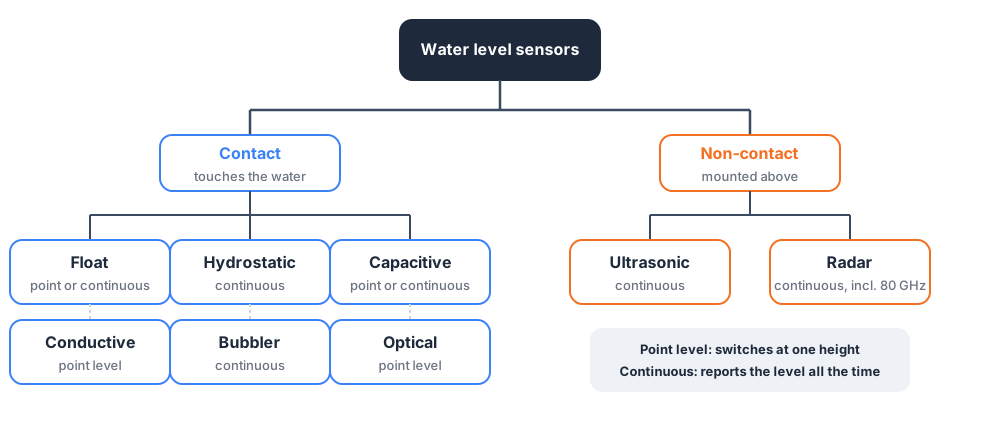
Point level sensors (floats, conductive probes, optical sensors) answer one question: has the water reached this height? They are ideal for simple pump start/stop and overflow or dry-run protection. Continuous level sensors (hydrostatic, ultrasonic, radar) report the actual level all the time, which enables trends, consumption tracking, forecasting and multiple configurable alarms. Many sites combine both: a continuous sensor for monitoring and an independent float switch as a safety backup.
Alarm Setpoints and Pump Control
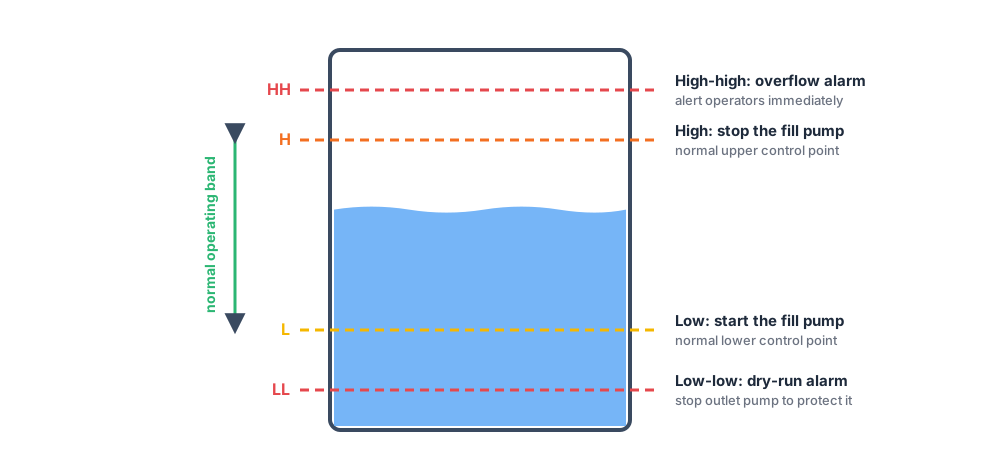
- High-high (HH): overflow alarm. Notify operators immediately and, where possible, stop the inflow.
- High (H): the normal upper control point. Stop the fill pump.
- Low (L): the normal lower control point. Start the fill pump.
- Low-low (LL): dry-run alarm. Stop the outlet pump to protect it, and alert operators.
Add a small deadband (hysteresis) between start and stop levels so pumps don’t cycle rapidly, and use time delays to ignore waves and splashes. For critical tanks, wire an independent float switch for HH or LL so protection still works if the main sensor fails.
Applications of Water Level Monitoring
| Application | What is monitored | Typical sensor |
|---|---|---|
| Overhead and underground water tanks (buildings) | Storage level, pump control, overflow | Ultrasonic, hydrostatic, float |
| Sumps and sewage lift stations | Wet-well level, pump sequencing | Hydrostatic, radar, bubbler, float |
| Borewells and groundwater | Water table depth, drawdown | Submersible hydrostatic |
| Reservoirs and dams | Storage volume, release planning | Radar, hydrostatic |
| Rivers, canals and drains | Flood early warning, flow estimation | Radar, hydrostatic in a stilling well |
| Cooling towers | Basin level, make-up water | Hydrostatic, float, conductive |
| Fire-fighting water tanks | Guaranteed reserve volume | Hydrostatic, radar, float backup |
| Industrial process and effluent tanks | Inventory, overflow protection | Radar, hydrostatic, ultrasonic |
Benefits of a Water Level Monitoring System
- No more overflows or dry tanks: automatic pump control and alarms keep levels in range.
- Protected pumps: low-low alarms stop pumps before they run dry and overheat.
- Fewer site visits: remote readings replace manual dipping and routine checks.
- Lower water and energy waste: spot leaks, abnormal consumption and inefficient pumping.
- Flood early warning: rising river or drain levels trigger alerts in time to act.
- Better planning: trends show demand patterns, refill rates and seasonal changes.
- Evidence for compliance: time-stamped records support audits, permits and reports.
Connectivity and Power Options
| Option | Typical range | Best for | Consider |
|---|---|---|---|
| 4–20 mA analogue | Wired, within the site | Direct connection to a PLC or controller | Needs cabling; one value per loop |
| RS485 Modbus RTU | Wired, up to ~1 km | Several sensors on one bus to SCADA | Needs cabling and addressing |
| LoRaWAN | Several km in open areas | Battery-powered sensors across a campus or town | Needs a gateway; low data rate |
| NB-IoT / LTE-M | Mobile network coverage | Scattered remote sites, no gateway needed | SIM costs; check coverage, especially underground |
| 4G / LTE | Mobile network coverage | Sites with mains power and more data | Higher power use |
Remote sites usually run on a primary lithium battery (several years at a modest reporting rate) or on solar with a rechargeable battery. Size the battery and panel for the worst season, not the average, and choose a reporting interval that balances detail with battery life. To compare wireless protocols in more depth, see our guide to battery-powered RF monitoring.
How to Choose a Water Level Sensor
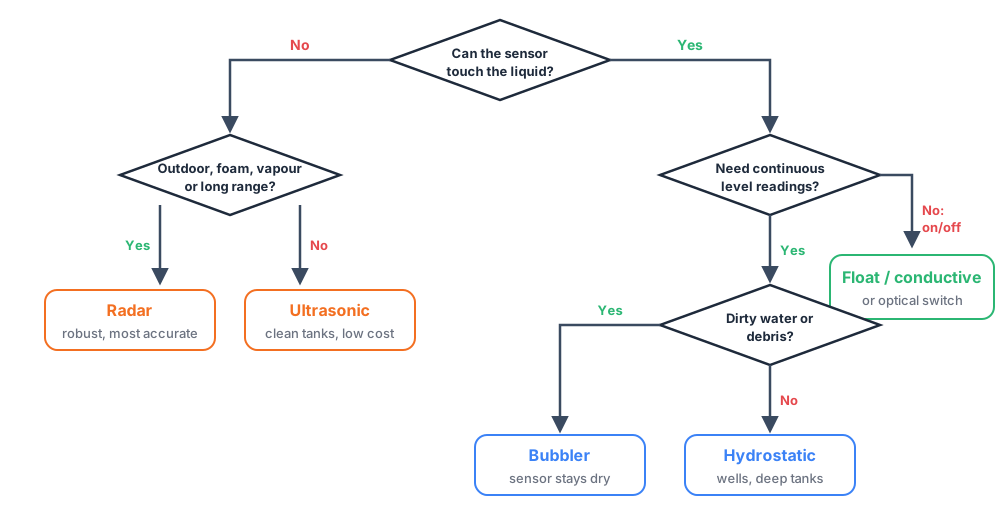
Then check these details before you buy:
- Measuring range: the full depth of the tank or well, plus margin.
- Accuracy and resolution: what the application actually needs; pump control needs less than billing or flood forecasting.
- Liquid and environment: clean or dirty water, foam, vapour, temperature, outdoor exposure, corrosive chemicals.
- Installation: narrow borewell casings suit submersible sensors; open channels suit radar mounted on a bracket.
- Output and integration: 4–20 mA, RS485 Modbus or a built-in wireless link that matches your system.
- Power: mains, battery or solar, and the battery life at your reporting interval.
- Enclosure rating: IP68 for submerged parts, IP65–IP67 for outdoor electronics.
- Maintenance: how often the sensor will need cleaning or recalibration in your water.
Installation Best Practices
- Define the goal: Decide what the system must do: prevent overflow, protect pumps from running dry, track consumption, provide flood warning or meet reporting requirements.
- Survey each site: Record tank or channel depth, liquid quality (clean, dirty, foamy), temperature, obstructions, outdoor exposure, power availability and mobile or LoRaWAN coverage.
- Choose the sensing principle: Match the method to the site: hydrostatic for wells and deep tanks, radar for outdoor and difficult surfaces, ultrasonic for clean indoor tanks, floats or conductive probes for simple on/off control.
- Choose connectivity and power: Use wired 4–20 mA or RS485 Modbus where a PLC is nearby, and LoRaWAN, NB-IoT, LTE-M or 4G for remote sites. Size batteries or solar for the worst season.
- Install and calibrate: Mount the sensor away from inlets and turbulence, set the zero (datum) and span, and verify the reading against a manual dip or staff gauge.
- Set alarms and integrate: Configure high-high, high, low and low-low setpoints, alert recipients and pump interlocks, then connect the data to SCADA, BMS or a cloud dashboard.
- Review and maintain: Check trends for drift, clean sensors on a schedule suited to the water quality, and re-verify calibration periodically.
Site tips: keep echo sensors away from inlets, ladders and tank walls, with a clear beam path to the surface. Use a stilling well in rivers and turbulent sumps. Never kink or block a hydrostatic sensor’s vent tube, and fit a desiccant or breather to keep moisture out of it. Respect the sensor’s minimum distance (blocking distance) from the surface at maximum level.
Common Problems and How to Fix Them
| Symptom | Likely cause | Fix |
|---|---|---|
| Ultrasonic reading jumps or drops out | Foam, condensation or turbulence | Use radar, add a stilling well, or move the sensor away from the inlet |
| Reading stuck near the top | False echo from a ladder, pipe or wall | Reposition the sensor; map out false echoes in the settings |
| Hydrostatic reading drifts with the weather | Blocked or wet vent tube | Clear the vent and fit a desiccant; check the cable gland |
| Float switch doesn’t trigger | Float stuck on debris or tangled cable | Clean, secure the cable and add a guide tube |
| Wrong level after installation | Incorrect zero or tank height setting | Re-check the datum against a manual measurement |
| Gaps in remote data | Weak signal or low battery | Test signal at the site; move the antenna; replace or resize the battery |
Standards and Specifications to Know
- IEC 60529 (IP ratings): IP68 for submersible sensors, with the rated depth stated; IP65–IP67 for outdoor electronics.
- ISO 4373: requirements for water level measuring devices used in hydrometry (rivers and open channels).
- Modbus RTU, MQTT and OPC UA: common protocols for integrating level data with PLCs, SCADA and cloud platforms.
- Radio regulations: wireless devices must comply with local rules for their frequency band, such as ETSI EN 300 220 in Europe, FCC Part 15 in the US and WPC requirements in India.
- Hazardous areas: where flammable vapours may be present, use sensors certified for the zone.
Always confirm which standards and editions apply to your project and region.
Frequently Asked Questions
What is a water level monitoring system?
A water level monitoring system measures the level of water in tanks, wells, sumps, reservoirs, channels or rivers, and sends the readings to a display, controller, SCADA or cloud dashboard. It raises alerts when the level is too high or too low and can control pumps automatically.
What is the difference between a water level sensor and a water level monitoring system?
A water level sensor is the device that measures the level. A water level monitoring system adds a data logger or controller, communications, software, alarms and often pump control, turning readings into information people can act on.
Which water level sensor is the most accurate?
Radar sensors and quality hydrostatic pressure transmitters typically give the highest accuracy for continuous level measurement. Radar is unaffected by temperature, vapour and most foam; hydrostatic sensors are very stable in wells and deep tanks. Real-world accuracy also depends on installation and calibration.
How does an ultrasonic water level sensor work?
An ultrasonic sensor mounted above the water sends a sound pulse and times how long the echo takes to return. The distance is half the round-trip time multiplied by the speed of sound, and the level is the tank height minus that distance. Because the speed of sound changes with temperature, good sensors compensate for it.
How does a hydrostatic water level sensor work?
A submersible hydrostatic sensor sits at the bottom of the tank or well and measures water pressure, which increases by about 9.8 kPa for every metre of water above it. The level is calculated from the pressure, using a vent tube or barometric compensation to remove atmospheric pressure.
Can I monitor a water tank level remotely?
Yes. A level sensor connected to a wireless transmitter or gateway, using LoRaWAN, NB-IoT, LTE-M or 4G, sends readings to a cloud dashboard or mobile app, with SMS or email alerts. Battery or solar power makes it possible at sites without mains supply.
What is the difference between point level and continuous level measurement?
Point level sensors, such as float switches, conductive probes and optical sensors, only detect whether the water has reached a specific height and switch on or off. Continuous level sensors, such as hydrostatic, ultrasonic and radar sensors, report the actual level at all times.
What IP rating does a water level sensor need?
Sensors that are submerged need IP68, with the rated depth matching the installation. Sensors and enclosures mounted outdoors above the water should be at least IP65–IP67 to withstand rain, spray and dust.
Which water level sensor is best for borewells and deep wells?
Submersible hydrostatic pressure sensors are usually the best choice for borewells and deep wells. They fit narrow casings, measure deep water columns accurately and need very little power, which suits battery-powered remote monitoring.
Planning Water Level Monitoring for Your Sites?
Amptronics designs wireless monitoring systems for industrial and commercial sites, from sensors and gateways to dashboards and alerts. Tell us about your tanks, wells or sumps and we’ll help you plan the right setup.
Talk to Our Team